A decision-grade overview for procurement engineers, EPC contractors and renewable energy integrators sourcing protection systems for island and coastal deployments.
Battery enclosures and protection systems are no longer passive metal boxes. In 2024 and beyond, they are engineered systems that combine thermal management, ingress protection, structural integrity, EMI shielding, fire mitigation and long-term corrosion resistance. For a coastal settlement such as Mulifanua — situated on the western side of Upolu in Samoa, home to the historic Mulifanua ferry wharf and a growing base of solar-assisted tourism and marine infrastructure — the enclosure is often the single most important determinant of whether an energy storage investment survives its first decade.
As a specialist manufacturer with deep experience in lithium battery solutions for solar energy storage, automotive applications and e-mobility, Ningbo Sahnova Solar Co., Ltd. approaches battery enclosures as a full protection chain: mechanical housing, sealing strategy, BMS integration, thermal path and certification evidence. This whitepaper consolidates the technical, commercial and supply-chain context that Mulifanua-based and Pacific-region buyers need in order to specify, compare and procure battery enclosures with confidence.
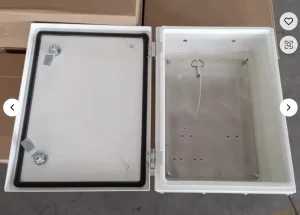
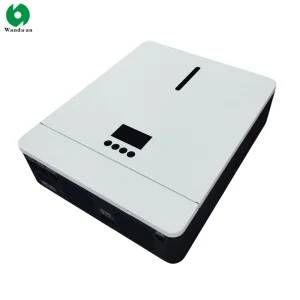
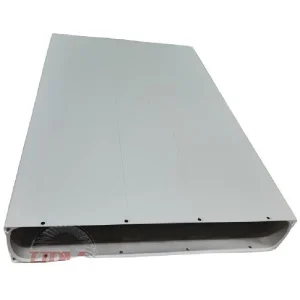
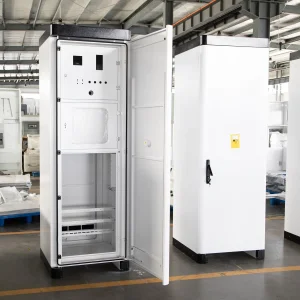
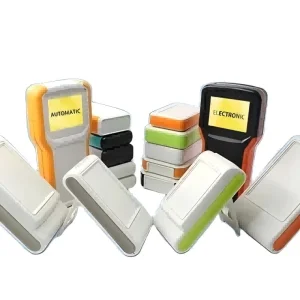
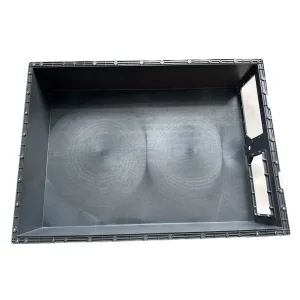
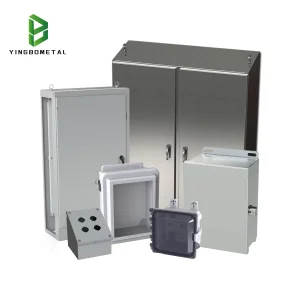
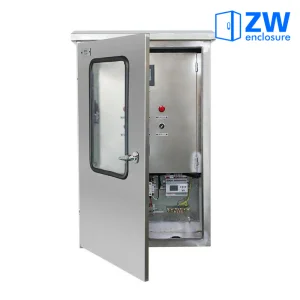
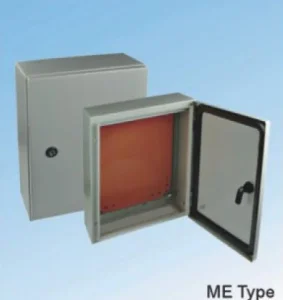
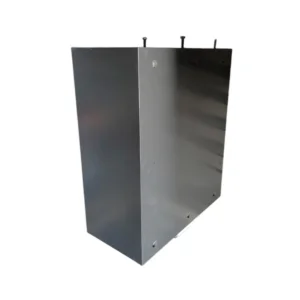
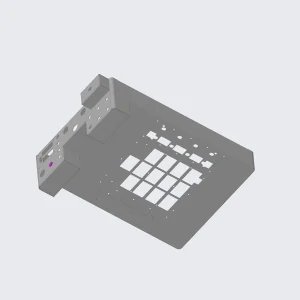
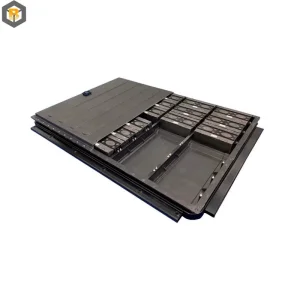
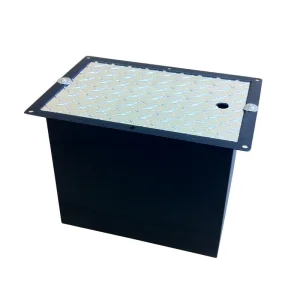
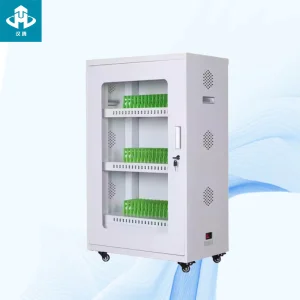
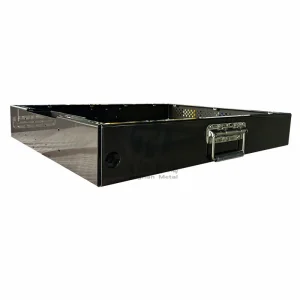
Four flagship enclosure platforms configured for the humidity, salt spray and thermal cycling typical of Pacific island deployments.
Experience, expertise, authority and trust — established through real manufacturing, real certifications and real deployments.
Ningbo Sahnova Solar Co., Ltd. is a professional manufacturer specializing in lithium battery solutions for solar energy storage, automotive applications and e-mobility systems. Established with a vision to support the global transition toward clean and sustainable energy, the company focuses on delivering high-performance, reliable and safe battery products tailored to diverse application scenarios.
In its early development stage, Sahnova concentrated on basic battery assembly and integration services, gradually building technical expertise in lithium battery design and energy management systems. As demand for renewable energy and electric mobility grew, the company expanded its capabilities by investing in advanced production equipment, automated assembly lines and rigorous quality control systems.
Today, Ningbo Sahnova Solar Co., Ltd. offers a wide range of lithium battery solutions, including energy storage battery packs, automotive starter batteries, and customized battery systems for electric bicycles and other mobility devices. The company integrates battery management systems (BMS) into its products to ensure optimal performance, safety and longevity. With a strong engineering team and a customer-oriented approach, Sahnova continues to provide customized solutions and technical support to clients worldwide, committed to innovation, quality and sustainability.

Understanding the deployment environment is the first step toward specifying the right protection system.
Mulifanua sits on the northwestern coast of Upolu, Samoa, and is best known as the departure point for the inter-island ferry to Savai'i. That single logistical fact shapes much of the local demand for battery enclosures. The wharf area operates marine equipment, navigation aids, refrigeration for cargo handling, and backup power for communication systems — all of which depend on batteries that must be protected from salt-laden air and high humidity.
Beyond the ferry terminal, Mulifanua and the surrounding districts host a growing number of small resorts, beach fale operations, agricultural processing units and community water-pumping stations. Many of these sites are off-grid or weakly grid-connected, relying on solar-plus-storage micro-systems. In this context, the battery enclosure performs three jobs at once: it protects the cells, it protects the people around them, and it protects the investment against a maintenance regime that may only see a technician a few times a year.
What buyers in Mulifanua should know about the direction of the global protection-systems market.
| Trend | What It Means | Implication for Mulifanua Buyers |
|---|---|---|
| Lithium iron phosphate (LFP) dominance | LFP is now the default chemistry for stationary storage due to cycle life and safety. | Enclosures must be sized and vented for LFP thermal behaviour, not legacy lead-acid assumptions. |
| Higher ingress protection expectations | IP65/IP67 is becoming the baseline for outdoor and coastal systems. | Specify IP67 with gland plates for wharf and beachfront sites. |
| Integrated thermal management | Passive vents, phase-change materials and active cooling are being designed into enclosures. | Ask suppliers for thermal calculations, not just box dimensions. |
| Fire safety and explosion protection | Deflagration venting and heavy-gauge steel designs are increasingly required. | Explosion-proof enclosures are recommended for indoor battery rooms and telecom cabinets. |
| Digital traceability | QR-coded material certificates and batch-level testing records are expected. | Request documentation packages for tenders and insurance compliance. |
A second structural shift is the move from commodity enclosures to engineered protection systems. Buyers increasingly evaluate suppliers on their ability to deliver a complete package: mechanical design, sealing validation, BMS integration, thermal simulation and certification support. This is precisely where manufacturers with in-house fabrication and battery engineering — such as Sahnova — differentiate themselves from pure sheet-metal shops.
Search intent research shows procurement teams converge on six core questions.
Buyers want IEC 60529 IP ratings, IEC 62619 battery safety references, RoHS/REACH statements and material certificates before awarding contracts.
Delivery windows of 25–45 days are now expected for custom enclosures, with sample turnaround under 10 days for standard platforms.
Procurement teams model corrosion, maintenance visits and replacement cycles — not just unit price — when comparing suppliers.
OEM/ODM tolerance for custom cutouts, branding, mounting patterns and BMS interfaces is a decisive selection criterion.
Pacific buyers need FOB/CIF clarity, seaworthy packaging and documentation that survives customs and insurance scrutiny.
Warranty terms, spare gaskets and remote engineering support matter for sites where local fabrication is unavailable.
Why the manufacturing base behind these enclosures is structurally more resilient than many buyers assume.
The phrase "China factory" often masks the real story. Modern Chinese enclosure manufacturers operate within dense industrial clusters where laser cutting, CNC bending, powder coating, gasket extrusion, fastener supply and testing laboratories are located within a short radius. For buyers in Mulifanua, this clustering produces three concrete advantages.
Cutting, forming, welding, coating and assembly occur under one quality system, reducing hand-off delays and tolerance drift between suppliers.
Automated assembly lines and laser systems deliver repeatable dimensions and surface finishes across production batches, which matters for multi-site rollouts.
Multi-source raw material relationships and regional logistics corridors allow manufacturers to absorb shocks in steel, aluminium or coating supply.
Equally important is engineering responsiveness. Factory 4.0 environments use digital design workflows that allow a buyer to send 3D models or specification sheets, receive DFM feedback, and approve a prototype within days rather than weeks. For Mulifanua projects where a single shipment may cover an entire phase of a solar rollout, this responsiveness translates directly into schedule certainty.
Real deployment contexts where the right enclosure specification determines system uptime.
Navigation lights, communication backup and cargo refrigeration rely on IP67 stainless or powder-coated enclosures resistant to salt spray.
Resorts, fale villages and agricultural sites use LFP battery packs housed in ventilated aluminium energy storage enclosures.
Rack-mount cabinet enclosures protect BMS electronics and battery strings at remote repeater and beacon sites.
Solar-powered pumps use heavy-gauge, corrosion-resistant enclosures with serviceable seals for long maintenance intervals.
Electric scooters and light EVs increasingly rely on waterproof OEM battery pack enclosures for humid tropical operation.
Cold storage and processing equipment need stable backup power protected by insulated, vibration-resistant enclosures.
Home battery systems use wall-mounted IP67 enclosures with clean cable entry and fire-safe construction.
Portable power stations for disaster response require rugged, explosion-proof and waterproof enclosures for field reliability.
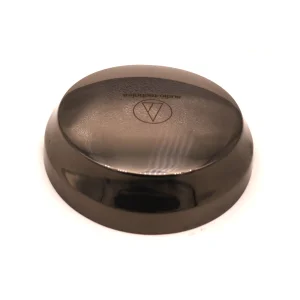
Eight additional platforms engineered for OEM/ODM programs, industrial backup and coastal resilience.
Additional enclosure configurations for EV, charging infrastructure, lifesafety and metal fabrication programs.
Use this checklist to align search intent with engineering requirements before requesting quotations.
| Requirement | Recommended Specification | Why It Matters in Mulifanua |
|---|---|---|
| Ingress protection | IP65 minimum; IP66/IP67 for wharf and beachfront | Salt spray and heavy rainfall are constant loads. |
| Material | Powder-coated aluminium or 304/316 stainless steel | Aluminium resists corrosion while remaining lightweight for transport. |
| Gasket | EPDM or silicone closed-cell gasket | Withstands UV, heat and humidity without hardening. |
| Fasteners | 316 stainless steel | Prevents galvanic corrosion at coastal sites. |
| Thermal design | Passive venting or louvred airflow path | Prevents heat build-up in tropical ambient temperatures. |
| Cable entry | IP-rated gland plates with strain relief | Maintains seal integrity after installation. |
| Safety | Explosion-proof or deflagration venting for indoor rooms | Protects personnel and property in the unlikely event of cell failure. |
Answers to the questions procurement teams and integrators ask most often.
For most outdoor and coastal installations in Mulifanua, IP66 or IP67 is recommended. IP65 may be adequate for sheltered locations, but the combination of salt spray, high humidity and heavy rain makes IP67 the safer baseline for wharf, beachfront and exposed solar sites.
Yes. Sahnova provides OEM and ODM engineering support, including custom cutouts, mounting patterns, branding, BMS interfaces and thermal design. Buyers can supply drawings or 3D models and receive design-for-manufacture feedback before prototyping.
Corrosion protection combines material selection (powder-coated aluminium or stainless steel), surface pretreatment, 316-grade fasteners and closed-cell EPDM or silicone gaskets. Drainage paths and avoiding mixed-metal contact are equally important.
Depending on the platform, suppliers can provide IP rating test references, material certificates, RoHS and REACH statements, and inspection reports. These documents are typically required for tenders, insurance and customs clearance.
Standard platforms can often ship within 25–35 days, while fully custom projects typically require 35–45 days depending on tooling and coating requirements. Sample turnaround for standard designs is usually under 10 days.
Seaworthy packaging with moisture barriers, foam protection at corners and palletized configuration is recommended. Export documentation, packing lists and compliance statements should accompany each shipment.
Yes. Heavy-gauge steel explosion-proof enclosures are available for hazardous and indoor battery-room applications, with deflagration venting options and safety-design documentation.
Yes. Sahnova integrates battery management systems and supports thermal design for enclosures, including passive ventilation, airflow paths and component placement that supports safe and efficient cell operation.
Share your ingress protection requirements, battery chemistry, site conditions and volume targets. Our engineering team will return a technical proposal, lead-time estimate and documentation package.
Send Inquiry Now Sahnova Solar