Direct access to verified high-performance battery configurations engineered to sustain critical load cycles under certified thermal envelopes.


Ningbo Sahnova Solar Co., Ltd. is a professional manufacturer specializing in lithium battery solutions for solar energy storage, automotive applications, and e-mobility systems. Established with a vision to support the global transition toward clean and sustainable energy, the company focuses on delivering high-performance, reliable, and safe battery products tailored to diverse application scenarios.
In its early development stage, Sahnova concentrated on basic battery assembly and integration services, gradually building technical expertise in lithium battery design and energy management systems. As demand for renewable energy and electric mobility grew, the company expanded its capabilities by investing in advanced production equipment, automated assembly lines, and rigorous quality control systems.
Today, Ningbo Sahnova Solar Co., Ltd. offers a wide range of lithium battery solutions, including energy storage battery packs, automotive starter batteries, and customized battery systems for electric bicycles and other mobility devices. The company integrates battery management systems (BMS) into its products to ensure optimal performance, safety, and longevity.

With a strong engineering team and a customer-oriented approach, Sahnova continues to provide customized solutions and technical support to clients worldwide. The company is committed to innovation, quality, and sustainability, striving to become a trusted global partner in the lithium battery and energy storage industry.
By employing advanced methodologies such as Electrochemical Impedance Spectroscopy (EIS), thermal stress testing, and real-time degradation analysis, our validation laboratories verify that every pack meets rigorous international regulations, supporting Tier-1 OEMs in scaling their systems safely.

As the global economy undergoes a fundamental transition towards deep electrification, the performance testing of lithium-based cells, modules, and packs has transformed from a post-manufacturing audit check into an essential, regulatory-mandated stage of the supply chain. Standardized validation protocols are critical for managing thermal runway risks, ensuring maximum operational efficiency, and stabilizing hardware capital investments over long operational lifetimes.
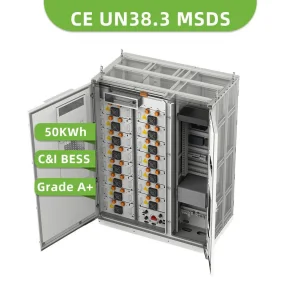
Uncompromising compliance with international shipping and safety mandates including UN38.3, UL 1973, UL 9540A, and IEC 62619, preventing liability exposure in core consumer and commercial markets.
Mitigating financial degradation risks by validating State of Health (SOH), capacity retention curves, and Internal Resistance (IR) drift rates over long cycles.
Calibrating algorithm parameters within custom BMS models, ensuring safe cell-level balancing, over-voltage/current cutoffs, and accurate State of Charge (SOC) tracking.
Ensuring reliability in diverse application areas requires measuring complex electrochemical characteristics. Our testing procedures analyze cells under multi-variable dynamic stresses.
Evaluates dynamic power response during peak discharge and regenerative charge states. HPPC maps internal DC resistance and polarization profiles, which is essential for e-mobility and grid-regulation applications.
Investigates internal cell dynamics across a range of AC frequencies. This non-destructive test isolates charge transfer resistance, SEI layer growth, and double-layer capacitance without altering the cell's physical state.
Characterizes efficiency during continuous high-rate current draw. Automated thermal imaging tracks hotspots within high-density configurations, validating cell spacing and active cooling system efficiency.
Applies severe physical and operational stress, including nail penetration, crush profiles, short circuits, and environmental chamber conditioning (-40°C to +85°C) to ensure physical integrity and trace failure pathways.
Different industries require unique performance characteristics. Sahnova adapts validation tests to meet the distinct engineering priorities of target sectors.
Focuses on high efficiency at 0.5C to 1C charge rates, deep discharge capabilities (80%-90% DOD), and sustained performance over multi-decade cycles.
Evaluates fast charging profiles (3C-6C) and mechanical resilience against vibration, G-shock, and dynamic thermal changes.
Optimizes energy density while maintaining high discharge capabilities (15C-25C) within tight weight budgets.
Ensuring testing capabilities align with future battery developments. Our strategic plan addresses emerging solid-state chemistries and predictive AI analysis.
Integrating machine learning algorithms into the test sequence to predict cycle life degradation up to 40% faster. Deploying dynamic digital twins to simulate multi-variable field stresses, reducing prototype optimization cycle times.
Developing custom high-pressure chambers and ultra-sensitive micro-expansion sensors to measure volumetric variations and mechanical stress in next-generation solid-electrolyte configurations.
Implementing decentralized digital battery passport systems. This integrates manufacturing and test data from the initial build, through operation, to end-of-life recycling sorting.
Meeting international standards is essential for global market entry. Sahnova aligns testing with specific regional requirements to simplify customs clearance and site approvals.
Get detailed answers about OEM customization capabilities, safety certifications, and testing methodologies.
Customized infrastructure and high-voltage platforms built to support severe industrial energy configurations.



 Sahnova Solar