How to Improve Charging Speed in Modern Battery Systems

Time:2026-09-20 Author:Isabella
0%

Charging speed has become a defining feature of modern battery systems. Drivers expect shorter stops, while device users want reliable power within minutes. Yet rapid charging is not controlled by the charger alone. Battery chemistry, temperature, state of charge, cable resistance, and battery age all shape the result.

Understanding what affects charging speed in modern battery systems requires looking inside the complete charging process. A lithium-ion cell may accept high current at a low charge level. Near full capacity, the battery management system usually reduces current to protect cell stability. Heat changes the equation. A pack sitting in direct sunlight may charge slower than one maintained near its recommended operating temperature. Even a thick cable can become a limiting detail.

Small details matter.

Professional testing often compares charging curves instead of advertising a single peak figure. This approach reveals how long the battery sustains high power, not merely when it reaches its maximum. Engineers also monitor voltage balance, internal resistance, cooling performance, and software controls. These measurements support safer, more realistic expectations.

Still, charging claims can be imperfect. Laboratory results may not match a cold winter morning, an aging battery, or a crowded charging station. That gap deserves attention. A practical improvement may involve preheating the pack, upgrading thermal management, reducing cable losses, or refining charging software. Faster charging should never be judged by speed alone. Durability, safety, efficiency, and consistent performance matter just as much.
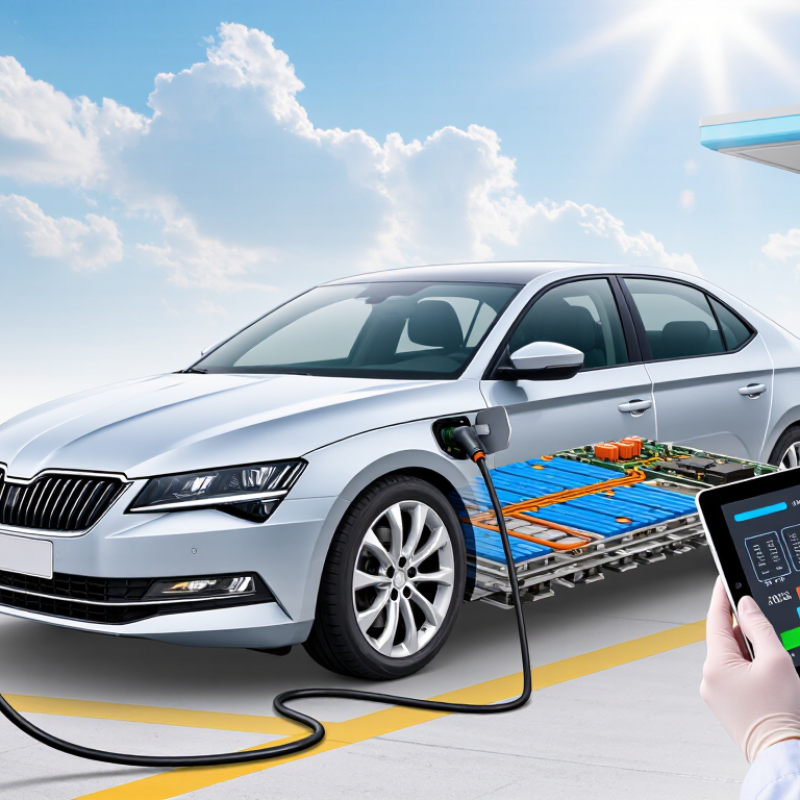
How to Improve Charging Speed in Modern Battery Systems

Battery Charging Speed: Key Concepts and Performance Limits

Charging speed is not simply a question of higher power. It depends on current, voltage, battery capacity, temperature, and state of charge. A 100 kW charger cannot deliver 100 kW continuously if the battery is cold or nearly full. The International Energy Agency reported almost four million public charging points worldwide in 2023, with fast chargers growing by about 55% (IEA, Global EV Outlook 2024). Infrastructure is expanding quickly. Battery acceptance remains the harder limit.

C-rate A useful measure is C-rate. A 1C charge theoretically fills a battery in one hour, but real systems reduce power to protect cells. Charging often slows sharply above 70–80% state of charge. This tapering limits the practical value of extreme peak power. The U.S. Department of Energy identifies thermal control, cell chemistry, and charging strategy as major factors affecting fast-charge performance (DOE Vehicle Technologies Office, 2023). Heat is not abstract. It appears near tabs, busbars, and tightly packed cells.

Temperature creates another performance boundary. Cold cells accept energy slowly, while excessive heat accelerates degradation. Preconditioning can improve charging, but it also consumes energy and time. A larger battery may support faster travel recovery, even when its peak charging rate is lower. That detail is easy to miss. Reported charging times can also seem cleaner than daily use, because tests often begin with a warm battery and a low starting charge. Engineers should report average power, charging windows, ambient temperature, and delivered energy—not only the maximum number.

Battery Chemistry and Cell Design for Faster Charging

Fast charging begins inside the cell, not at the cable. Chemistry controls ion movement, heat, and usable life. LFP cells offer strong thermal stability and lower material costs. The International Energy Agency’s Global EV Outlook 2024 reports that LFP represented about 40% of the global EV battery market in 2023. However, LFP usually stores less energy per kilogram than nickel-rich chemistry. Nickel-rich cells support longer range, but they need stricter thermal control. The trade-off is real. Faster is not automatically better.

Cell design can shorten the ion’s journey. Thinner electrodes reduce diffusion distance, while larger tabs lower electrical resistance. Improved cooling plates remove heat near charging hotspots. Silicon-rich anodes may increase capacity, but repeated expansion can damage internal interfaces. BloombergNEF’s 2024 Battery Price Survey reported an average lithium-ion pack price of 115 dollars per kWh, a 20% annual decrease. Lower costs may support better cooling and stronger materials. Still, I would not promise one perfect formula. Manufacturing consistency remains a weakness. Heat wins.

Tips: Keep charging between 10% and 80% when practical. Precondition the battery before high-power charging. Avoid repeated fast charging at extreme temperatures. Monitor charging speed, not only the displayed power. A high number can hide rising cell temperature.

Thermal Management and Its Role in Charging Performance

How to Improve Charging Speed in Modern Battery Systems

Thermal management often decides how quickly a battery can accept power. During rapid charging, lithium-ion cells generate heat through resistance and chemical reactions. Excess heat accelerates degradation and can trigger safety controls. The International Energy Agency reported that global electric-vehicle battery demand exceeded 750 GWh in 2023, increasing pressure on faster, reliable charging systems (Global EV Outlook 2024).

A practical system uses temperature sensors across the battery pack, not only near its center. Liquid cooling plates can remove heat between cell modules. Air cooling is simpler, but it may struggle during repeated high-power charging. Keeping cells near their preferred operating range, commonly around 20–40°C, helps maintain charging efficiency. The U.S. Department of Energy identifies thermal control as a key factor in fast-charging performance and battery durability (Vehicle Technologies Office).

Small details matter. Before charging, software can precondition a cold battery using controlled heating. In hot weather, it may reduce charging power before temperatures rise sharply. This protects the cells, but it also disappoints drivers expecting constant peak speed. A warm pack is not always a healthy pack. Cooling pumps consume energy, add weight, and can fail. Engineers should therefore balance cooling capacity, sensor accuracy, and real-world maintenance. Laboratory results can look impressive. Road conditions are less forgiving. Celsius changes quickly.

How to Improve Charging Speed in Modern Battery Systems - Thermal Management and Its Role in Charging Performance
Thermal Management Condition Typical Cell Temperature During Charging Recommended Maximum Temperature Spread Practical Charging Rate Approximate 10–80% Charging Time Relative Heat Generation Charging Performance and Main Considerations
Passive cooling at moderate ambient temperature 20–30°C ≤5°C across the battery pack 0.5C Approximately 85–110 minutes Low Suitable for routine charging. The lower current reduces resistive heating and generally supports good energy efficiency and long cycle life.
Forced-air cooling with monitored airflow 20–35°C ≤5°C across the battery pack 0.5–1C Approximately 45–100 minutes Low to moderate Improves heat removal compared with passive cooling. Even airflow distribution is important because local hot spots can cause uneven aging and earlier charging-power reduction.
Liquid cooling with active temperature control 20–35°C ≤3–5°C across the battery pack 1–1.5C Approximately 30–55 minutes Moderate to high Maintains a more uniform cell temperature and enables higher charging current when the battery-management system confirms that voltage, state of charge, and temperature limits are satisfied.
Advanced liquid cooling with pre-conditioning 25–35°C ≤3°C across the battery pack 1.5–2C Approximately 20–40 minutes High Supports high-power charging by warming cold cells before charging and removing heat during the constant-current phase. Cooling capacity, electrical resistance, and charge taper remain limiting factors.
Cold battery without pre-heating Below 10°C ≤5°C, with no cell below the permitted limit Typically limited to 0.2–0.5C Approximately 100–180 minutes or longer Low to moderate Charging power is commonly reduced to limit lithium-plating risk. Pre-heating the cells before high-current charging is safer than immediately applying a high charge rate.
Very cold battery during active charging Below 0°C Not applicable until the cells reach the permitted charging temperature Charging may be disabled or heavily restricted Highly variable Low, but safety risk is elevated Charging below the cell manufacturer’s approved temperature range can promote metallic lithium deposition, capacity loss, and internal damage. Controlled heating is normally required.
Hot battery with insufficient heat rejection Above 40°C ≤5°C, while remaining below the system limit Typically reduced to 0.2–0.5C Approximately 100–180 minutes or longer High Charging current is reduced to control thermal stress. Continued operation at elevated temperature can accelerate electrolyte degradation, resistance growth, and capacity fade.
Hot battery near the protection threshold Above 45–50°C Must remain within the battery-management system limit Charging may be paused Not applicable until the battery cools Very high Charging interruption is used to protect the cells. The exact threshold depends on cell chemistry, pack design, cooling capability, and the approved operating limits.
Engineering reference: The values shown are representative ranges for modern rechargeable lithium-ion battery systems, not universal specifications. Actual charging speed depends on cell chemistry, internal resistance, state of charge, ambient temperature, cooling-system capacity, charger power, and battery-management-system limits. Charging time estimates assume a controlled 10–80% session; the final portion of charging normally tapers to protect the cells.

Charging Protocols, Power Electronics, and Battery Protection

How to Improve Charging Speed in Modern Battery Systems

Charging speed depends on more than higher current. According to the International Energy Agency’s Global EV Outlook 2024, electric car sales approached 14 million in 2023, while public charging infrastructure grew by over 40%. This expansion increases pressure on charging protocols, grid stability, and battery protection.

ISO 15118 enables communication between a vehicle and charger before power rises. The system can negotiate voltage, current, temperature limits, and charging schedules. That conversation matters. A charger should reduce current when cell temperatures climb or voltage differences widen. The IEC 61851 framework also defines control principles for safer conductive charging. Yet protocol compliance alone cannot prevent every failure.

Power electronics must convert energy efficiently and manage heat inside compact enclosures. Silicon-carbide switching devices can reduce conversion losses, but thermal design remains critical. The U.S. Department of Energy’s Vehicle Technologies Office highlights thermal management as a key factor in fast-charging durability. Battery-management systems should monitor each cell, not only the full pack. They need current sensors, redundant temperature readings, isolation checks, and rapid shutdown logic.

Small details matter. A liquid-cooled cable may feel only slightly warm, while a hidden connector fault creates severe resistance. Designers often chase peak kilowatts. That can be shortsighted. Real charging performance depends on sustained power, cell balance, and ageing control. More testing under cold, hot, and partially degraded conditions is still needed. Some published efficiency figures also rely on ideal laboratory cycles, not daily charging behavior.

System Monitoring and Maintenance for Safe, Efficient Charging

Fast charging depends on more than a powerful charger. A healthy battery system must control temperature, voltage, and current continuously. During charging, monitoring software should record these values at regular intervals. A sudden temperature rise, uneven cell voltage, or repeated power reduction may indicate resistance, aging, or poor ventilation. Do not ignore small changes. They often appear before serious faults.

Tips

Keep charging areas cool, dry, and unobstructed. Inspect cables and connectors for looseness, discoloration, or cracked insulation. Clean contact surfaces with approved materials, and never force a damaged connector into place. Check the battery management system for alerts after each unusual charging event. A simple log can reveal patterns that a single inspection misses. For example, charging may slow only on warm afternoons or after several deep discharge cycles.

Maintenance should follow the system manufacturer’s technical requirements and local safety rules. Periodic testing can compare actual charging time with its normal range. If capacity drops sharply, stop chasing speed and investigate the cause. Higher current is not always better. I have seen maintenance routines focus on software settings while overlooking blocked air channels and loose terminals. That mistake is easy to repeat. Leave room for uncertainty, and verify readings with calibrated equipment before changing charging limits.

How to Improve Charging Speed in Modern Battery Systems

Representative lithium-ion charging profile showing how charging power is maintained during the constant-current phase and gradually reduced during the constant-voltage phase. Monitoring battery temperature and state of charge helps maintain safe, efficient charging and supports timely cooling-system maintenance.

Typical operating guidance: keep battery temperature within the system manufacturer's specified range, inspect cooling paths regularly, and investigate unexpected power reduction or temperature rise.

FAQS

Does higher charger power always mean faster charging?

No. Battery temperature, charge level, voltage, and current can reduce delivered power. A cold battery may accept energy slowly. A nearly full battery usually charges even more slowly. The cable rating is only one part of the result.

What does a 1C charging rate mean?

A 1C rate theoretically charges a battery in one hour. Real systems often reduce power to protect the cells. Charging commonly tapers above 70% or 80% charge. So, one hour is not a dependable promise.

Why does charging slow down near full capacity?

The battery management system lowers current as the charge level rises. This reduces heat, voltage stress, and possible cell damage. The final 20% can take surprisingly long. That part is easy to underestimate.

How does temperature affect charging speed?

Cold cells accept energy slowly because ion movement becomes less efficient. Excessive heat can increase degradation and limit charging power. Heat may build near tabs, busbars, and tightly packed cells. Heat wins sometimes.

What is battery preconditioning?

Preconditioning adjusts the battery toward a more suitable temperature before fast charging. It can improve charging speed when the battery is cold. However, it consumes energy and requires extra time. The benefit is useful, but not free.

Which battery chemistry supports faster charging?

No chemistry wins in every situation. LFP cells provide strong thermal stability and lower material costs. Nickel-rich cells usually offer higher energy density and longer potential range. They require stricter thermal control. The trade-off remains real.

Can cell design improve fast-charging performance?

Yes. Thinner electrodes shorten the path for ions. Larger tabs can reduce electrical resistance. Improved cooling plates may remove heat near charging hotspots. Silicon-rich anodes can increase capacity, but expansion may damage internal interfaces. Progress is uneven.

Is maximum charging power a reliable performance measure?

Not by itself. A displayed peak may last only briefly. Average power, charging duration, starting charge, temperature, and delivered energy matter more. A warm battery starting near low charge may produce impressive results. Daily use can look messier. That deserves more honest reporting.

How can drivers reduce charging stress?

Keep charging between 10% and 80% when practical. Precondition before high-power charging. Avoid repeated fast charging during extreme heat or cold. Watch charging speed and battery temperature, not only the power number. I would not treat every peak figure as meaningful.

Conclusion

Modern battery charging speed depends on several connected factors, including cell chemistry, internal resistance, battery size, state of charge, and the limits of the charging system. Understanding what affects charging speed in modern battery systems helps explain why charging is often fastest at lower or moderate charge levels and slows as the battery approaches full capacity. Cell design, electrode materials, and pack configuration can improve power acceptance, but these gains must be balanced against longevity, safety, and energy density.

Thermal management is equally important because excessive heat can reduce performance and accelerate battery degradation, while low temperatures can restrict charging power. Effective charging protocols use carefully controlled voltage and current profiles, supported by power electronics that deliver energy efficiently. Battery protection systems monitor temperature, voltage, current, and cell balance to prevent unsafe conditions. Regular inspection, accurate monitoring, and appropriate maintenance further support reliable, efficient charging throughout the battery system’s service life.

Isabella

Isabella

Isabella is a dedicated marketing professional with a sharp focus on driving brand growth and engagement through strategic content creation. With an extensive background in digital marketing, she combines her passion for storytelling with her keen understanding of industry trends to deliver......