A battery pack is only as dependable as the cells working inside it. Small differences in capacity, internal resistance, age, or temperature can cause some cells to reach their voltage limits before others. The imbalance may be difficult to spot at rest. Under load, however, one weak cell can reduce usable capacity or trigger a battery management system’s protection. Even a tidy voltage chart can hide important differences.
Understanding how to balance battery cells in a pack starts with identifying the cell chemistry and pack design. A measured voltage alone does not reveal a cell’s full condition. Check the manufacturer’s specifications, inspect connections, and use a suitable battery monitor or charger. Passive balancing usually dissipates excess energy as heat; active balancing transfers energy between cells. Each approach has trade-offs. Neither repairs a damaged cell. Work on a de-energized pack only when the equipment and procedure allow it, and seek qualified help if the pack is swollen, unusually hot, or physically damaged. Small details matter. A loose connection can resemble a cell problem, while uneven temperatures can distort readings. The practical answer is rarely a single setting: safe balancing depends on accurate measurements, compatible equipment, and regular checks. Even with careful monitoring, some uncertainty remains, so follow the battery maker’s guidance rather than relying on a generic voltage target.
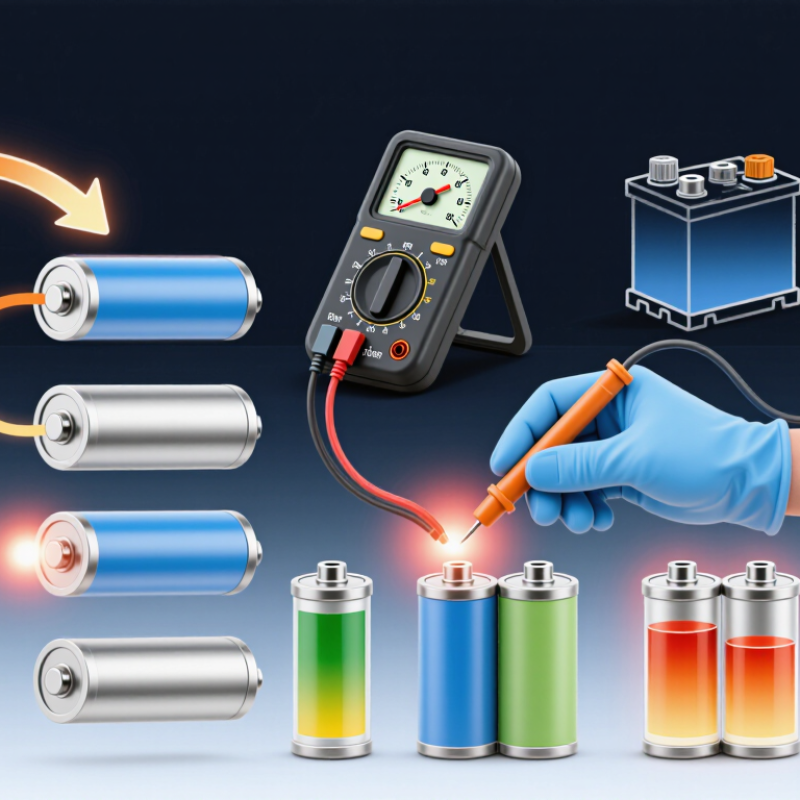
Understand Why Battery Cells Become Imbalanced
Battery cells in a pack can drift apart even when they share the same charger. Small differences in capacity, internal resistance, and self-discharge begin during manufacturing and grow with use. In a series pack, every cell carries the same current, but the cells do not have identical usable capacity. The weakest cell may reach its voltage limit first, restricting the pack while energy remains in other cells. Heat adds another variable. A cell near a warm enclosure wall may age faster than one near a cooler edge. Not dramatic, but important.
A voltage gap does not always mean the cells have permanently different capacity. Voltage changes with charge level, temperature, and recent load; a reading taken just after acceleration can mislead. Measure cells under consistent conditions, such as after the pack rests and temperatures settle. Balancing corrects charge differences, but it cannot restore capacity lost through aging or damage. That distinction is easy to overlook. If one cell repeatedly separates from the group, inspect its connections, temperature, and measured capacity rather than relying on balancing alone. The diagnosis may still be uncertain without controlled tests.
How to Balance Battery Cells in a Pack: Why Cells Become Imbalanced
Illustrative example of individual cell voltages in an eight-cell lithium-ion pack before and after balancing during charge.
Cells can drift apart because of small differences in capacity, self-discharge, temperature, and aging. Balancing reduces differences in state of charge; it does not repair a weak or damaged cell. Compare voltages under similar conditions, and follow the battery manufacturer’s limits.
Assess Cell Voltage and State-of-Charge Differences
How to Balance Battery Cells in a Pack?
Assess Cell Voltage and State-of-Charge Differences
Before balancing, compare every cell’s voltage under the same conditions. Record readings after charging current stops and temperatures settle; even a small temperature difference can distort comparisons. A single measurement is not enough. Track cell voltage at rest, during charging, and under a modest load. If one cell repeatedly rises faster or sags farther, investigate it rather than relying on pack-average voltage.
Voltage is only a proxy for state of charge (SOC). Lithium-ion cells can show similar voltages while holding different usable capacity, especially across flat portions of their voltage curve. Estimate SOC with calibrated current tracking, then compare each cell’s estimate with its voltage history. The IEA’s Global EV Outlook 2024 reports that EV battery demand reached about 750 GWh in 2023, underscoring why dependable cell-level monitoring matters at scale. That figure does not set a balancing threshold; use the cell specification and the battery-management system’s measurement accuracy.
Look for persistent outliers, not one-off noise. Check sensor connections, temperature, and measurement timing before deciding that a cell is drifting. A clean snapshot can still mislead. Log the spread between the highest and lowest cell voltages, plus SOC estimates, across several charge-discharge cycles. If voltage spread grows while estimated SOC remains close, capacity or resistance differences may be developing. It is an imperfect diagnosis, but far better than balancing from voltage alone.
Choose a Passive or Active Balancing Method
Passive balancing is often the practical choice when cell differences are small and cost, size, and simplicity matter. It bleeds excess charge through resistors, usually near the top of charge. The trade-off is heat. A warm resistor beside a tightly packed cell needs careful thermal design and monitoring. Passive circuits are straightforward, but they cannot recover the energy they dissipate.
Active balancing transfers charge between cells instead of turning it into heat. This can help larger packs, frequent cycling, or applications where usable capacity matters. The circuit is more complex, though: converters, extra sensing, and control logic add cost and possible failure points. A 2024 NREL Annual Technology Baseline models utility-scale lithium-ion storage at 85% round-trip efficiency. That figure describes the whole storage system, not a balancing circuit, so it should not be used to claim active balancing’s efficiency.
Measure the pack first. Log cell voltages through charging and discharging, and check temperatures near balancing components. If one cell repeatedly reaches its voltage limit early, investigate cell variation, wiring resistance, and temperature before choosing a stronger balancing method. I would not treat a single voltage snapshot as proof. It can be misleading. For a compact pack with modest imbalance, passive balancing may be enough; for persistent imbalance and valuable stored energy, active balancing deserves a closer engineering review.
Configure the Pack’s Balancing System Safely
Balancing begins with the pack’s limits, not a guessed voltage. Check cell chemistry, series count, voltage range, and temperature limits in the cell and battery-management documentation. Use a balancing system designed for that configuration. Passive balancing releases small amounts of energy through resistors; active systems transfer energy between cells. Neither can repair a weak or damaged cell. Stop if a cell heats unexpectedly. Small details matter.
Tips: Disconnect the pack from its load and charger before connecting the harness. Confirm connector pinout and polarity with a meter; wire colors are not proof. Work on a clear, nonconductive surface. Protect exposed terminals, and keep loose tools away. Check balancing-current and temperature limits, too. A slow balance may be normal.
After installation, inspect each cell reading individually, then compare readings under stable conditions. Set start and stop thresholds within cell specifications, and verify that balancing activates only where expected. Monitor temperatures during the first controlled charge. Stop for swelling, odor, unusual warmth, or unstable readings. Record settings and measurements. It is easy to trust a tidy display too much. Recheck the physical connections. If the chemistry or wiring is uncertain, do not energize the pack until a qualified technician confirms the design.
Monitor Cell Balance During Charging and Use
Cell balance is a live condition, not a one-time setup. During charging, record each cell’s voltage, the highest-to-lowest voltage spread, balancing status, and temperature. Watch closely near full charge, where small voltage differences can become more apparent. A normal-looking pack voltage can hide one cell reaching its limit early. Small differences matter. Use the battery maker’s specified voltage and temperature limits; do not substitute a universal threshold.
During use, track the lowest cell voltage under load and compare it with readings after the pack rests. Current can temporarily pull a weak cell’s voltage down, so a single snapshot may mislead. Review trends across charge and discharge cycles, and investigate repeated outliers, rising temperatures, or balance activity that never settles. NREL’s 2024 Annual Technology Baseline uses 85% round-trip efficiency for utility-scale lithium-ion storage. That is a system-level assumption, not a cell-balance target; pack efficiency alone cannot confirm healthy cells. One easy mistake is trusting a tidy dashboard too much. Check raw cell readings and sensor plausibility, too.
Conclusion
Battery cells can become imbalanced over time because of differences in manufacturing, temperature, aging, and usage. To understand how to balance battery cells in a pack, first compare each cell’s voltage and state of charge, using measurements taken under consistent conditions. These differences help determine whether balancing is needed and how much correction may be appropriate.
A balancing system may use a passive method, which reduces higher cells’ charge, or an active method, which transfers energy between cells. Choose an approach suited to the pack, and configure it according to the system’s operating limits and safety requirements. During charging and regular use, monitor cell voltages and temperatures for signs of growing imbalance. Consistent checks can help identify issues early, support reliable pack performance, and show when further inspection or maintenance is needed.

 Sahnova Solar