7 Best Roles of Batteries in Renewable Energy Systems

Time:2026-10-20 Author:Liam
0%

What is the role of batteries in renewable energy systems? This question matters as solar panels and wind turbines produce electricity unevenly. A battery can store surplus power at noon, then release it after sunset. It can also respond within milliseconds when clouds reduce solar output.

Fatih Birol, Executive Director of the International Energy Agency, has described batteries as “a game changer for the energy sector.” His view reflects a major industry shift. Batteries now support energy shifting, grid balancing, backup power, frequency control, and renewable-energy integration. They can also reduce curtailment when wind or solar generation exceeds immediate demand. In a remote microgrid, this may keep lights, refrigeration, and communications operating through the night.

The benefits are practical, but they are not unlimited. Battery systems require minerals, careful thermal management, replacement planning, and responsible recycling. Their performance also changes with temperature, age, and charging patterns. A large battery does not automatically create a reliable clean-energy system. It needs accurate forecasting, strong controls, and suitable grid design.

This guide examines seven important roles of batteries in renewable energy systems. It considers both proven applications and uncomfortable limitations. The discussion will connect technical functions with real operating conditions, such as evening demand peaks and sudden wind changes. Some conclusions may remain imperfect. Battery technology is developing quickly, and local markets often produce different results. Still, understanding these roles offers a clearer foundation for evaluating storage projects, investment decisions, and future energy planning.
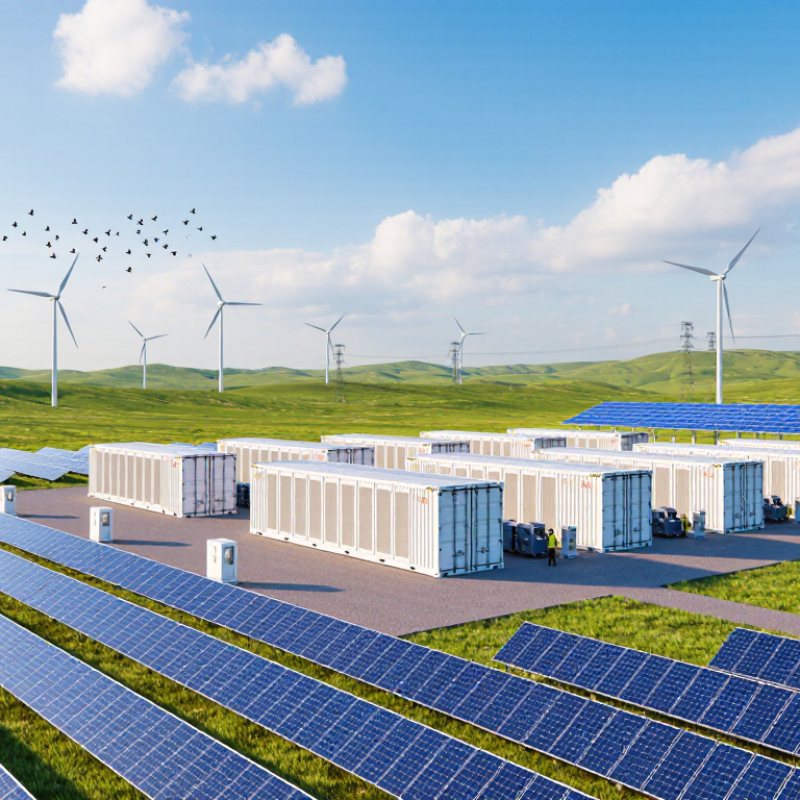
7 Best Roles of Batteries in Renewable Energy Systems

Battery Energy Storage in Renewable Energy Systems

7 Best Roles of Batteries in Renewable Energy Systems

Battery Energy Storage in Renewable Energy Systems

Battery energy storage turns intermittent renewable power into a more controllable resource. It stores excess solar electricity at noon and releases it after sunset. This energy shifting reduces curtailment and supports evening demand. The International Energy Agency reported that global battery storage additions reached about 42 GW in 2023. It also estimates that storage capacity must expand fourteenfold by 2030 under its net-zero pathway.

Batteries provide several grid services beyond energy shifting. They can balance frequency within seconds and smooth sudden wind changes. They support voltage control near renewable plants and reduce pressure on transmission lines. Operators can use them for peak shaving, spinning reserve, and black-start support. During outages, batteries may keep critical loads running. Timing matters. A properly sized system reacts faster than many conventional generators.

However, battery storage is not a perfect answer. Performance depends on temperature, cycling depth, degradation, and local grid rules. The International Renewable Energy Agency notes that storage value varies greatly with technology, duration, and application. A four-hour battery may manage evening peaks, but it cannot cover several cloudy days alone. Engineers must also consider fire protection, recycling, land use, and replacement costs. Some projects still appear efficient on paper, yet perform poorly when dispatch assumptions are unrealistic. Data quality remains an uncomfortable weakness.

Stabilizing Power Supply from Variable Renewable Sources

7 Best Roles of Batteries in Renewable Energy Systems

Stabilizing Power Supply from Variable Renewable Sources

Batteries act as shock absorbers in renewable energy systems. When clouds cross a solar field, they can release electricity within seconds. During a wind lull, stored power can cover evening demand. This flexibility supports seven roles: frequency regulation, ramping control, peak shaving, reserve capacity, black-start support, grid congestion relief, and time shifting. The International Energy Agency’s Batteries and Secure Energy Transitions report (2024) estimates 86 GW of global battery storage existed in 2023. Its net-zero pathway requires about 1,200 GW by 2030. That gap is enormous.

A four-hour battery can move midday solar power into the dinner peak. It cannot replace seasonal storage. That distinction matters. The International Renewable Energy Agency reported lithium-ion battery costs falling from 1,160 dollars per kilowatt-hour in 2010 to 176 dollars in 2018. Lower costs improved project economics, but degradation still reduces usable capacity. Heat, deep cycling, and poor maintenance accelerate that decline. Operators therefore need accurate forecasts, temperature control, and clear replacement plans. Batteries also consume energy during charging and discharging. Round-trip losses are easy to overlook. A technically impressive project may still underperform financially. Real field data should challenge optimistic models, especially where renewable output changes sharply within minutes.

7 Best Roles of Batteries in Renewable Energy Systems

Batteries stabilize variable renewable generation by responding quickly, shifting energy across time, and maintaining grid reliability. The chart shows representative engineering response-time benchmarks for common battery applications.

Values are representative operating benchmarks: fast grid services respond in seconds, while energy shifting and backup applications typically operate over hours. Actual performance depends on system design, controls, and grid requirements.

Shifting Renewable Electricity to Meet Demand

7 Best Roles of Batteries in Renewable Energy Systems

Shifting Renewable Electricity to Meet Demand

Solar panels often produce their most power at midday, when household demand is modest. Batteries capture this surplus and release it after sunset, when lights, appliances, and heating increase consumption. This time shift makes renewable electricity more useful without building generation for every evening peak.

Batteries also provide several grid services. They absorb excess wind power, reduce renewable curtailment, and help smooth sudden output changes. Fast controls can support frequency, while scheduled discharge can lower peak demand. Stored energy can provide backup during short interruptions and reserve capacity during uncertain weather. In remote systems, batteries can stabilize voltage and reduce reliance on fuel-based generators.

Real projects require careful sizing. A battery with high power may discharge quickly but lack evening duration. A larger energy capacity may cost more and sit partly unused. Operators must track state of charge, temperature, cycling limits, and round-trip efficiency. A cloudy forecast can leave too little energy for the night. That risk is real. Weather models improve, but they are not perfect. Grid planners should test several seasons, include degradation, and allow room for unexpected demand. Good design shifts electricity when it matters, not merely when the battery is full.

Providing Backup Power During Grid Interruptions

7 Best Roles of Batteries in Renewable Energy Systems

Providing Backup Power During Grid Interruptions

When the grid fails, batteries keep essential circuits operating through an inverter and transfer system. They can power lighting, medical equipment, communication devices, pumps, and refrigeration. Solar panels may continue charging the battery, but only when sunlight and system controls permit it. During a winter outage, stored energy can protect pipes from freezing and preserve temperature-sensitive supplies. Runtime depends on battery capacity, starting loads, weather, and household demand.

Tips: Define critical loads before installation. Set a reserve level for overnight use. Test the system every few months. Check ventilation, temperature, cables, and warning indicators. A professional should verify protection settings and emergency isolation procedures.

A dependable backup system needs more than a large battery. The inverter must handle motor surges from pumps or refrigerators without shutting down. Automatic transfer equipment should switch smoothly, while monitoring software can reveal declining capacity. Keep access clear and maintain written operating instructions. People often underestimate standby consumption from routers, controls, and chargers. That small drain can shorten backup time considerably. One assumption deserves review: solar generation is not guaranteed during an outage. Snow, smoke, storms, or damaged wiring may reduce charging. For that reason, essential circuits should be prioritized, and the reserve target should reflect realistic weather conditions rather than ideal forecasts.

Supporting Grid Frequency and Voltage Regulation

7 Best Roles of Batteries in Renewable Energy Systems

Supporting Grid Frequency and Voltage Regulation

Batteries stabilize renewable-heavy grids by reacting faster than conventional generators. A frequency event can begin after a cloud crosses a solar field or wind output suddenly falls. Battery inverters can change power flow within milliseconds, helping arrest that disturbance before it spreads.

The IEA’s Batteries and Secure Energy Transitions report states that global battery storage additions in the power sector more than doubled in 2023. This growth reflects a practical need, not only a storage trend. NREL research shows that advanced inverters can provide fast frequency response and voltage support when properly configured. During voltage dips, batteries inject reactive power. During overvoltage, they absorb it. The equipment works quietly, often behind a substation fence.

Control settings still matter. Poor coordination can create oscillations or drain the battery too early. That risk is easy to underestimate. Grid operators should define response speed, voltage limits, state-of-charge reserves, and recovery procedures before commissioning.

Tips: Keep a reserve band for emergencies. Test performance during low and high state-of-charge conditions. Review inverter settings after major network changes. IEC 62933 guidance and regional grid codes can support consistent testing, but local requirements differ. A battery is not automatically a complete voltage solution; weak lines, protection settings, and communication delays can still limit results.

7 Best Roles of Batteries in Renewable Energy Systems - Supporting Grid Frequency and Voltage Regulation

Indicative operating ranges vary according to battery chemistry, inverter controls, grid-code requirements, and project design.
No. Battery Role How It Supports Renewable Grids Typical Response or Duration Primary Grid Variable Key Performance Indicators Main Benefit
1 Fast Frequency Response Rapidly charges or discharges when generation and demand become unbalanced, limiting the initial rate of frequency change. Approximately 100 milliseconds to a few seconds System frequency and rate of change of frequency Response time, active-power accuracy, state-of-charge availability, response droop Reduces frequency excursions and helps prevent under-frequency load shedding.
2 Frequency Regulation Continuously adjusts active power around a set point to correct short-term deviations between electricity supply and demand. Sub-second response with sustained operation from seconds to minutes Nominal grid frequency, commonly 50 or 60 Hz depending on the power system Signal-tracking accuracy, ramp rate, availability, energy throughput Improves frequency quality while accommodating variable wind and solar output.
3 Voltage Regulation and Reactive Power Control Inverters supply or absorb reactive power and can adjust active power to maintain voltage within permitted limits. Milliseconds to a few seconds Voltage magnitude, power factor, and local reactive-power balance Voltage deviation, reactive-power range, power-factor capability, inverter availability Reduces voltage fluctuations and supports reliable connection of distributed renewable generation.
4 Renewable Energy Smoothing Absorbs short-term excess generation and supplies power during brief renewable-output drops caused by clouds or wind variability. Seconds to tens of minutes Power ramp rate and renewable plant output variability Ramp-rate compliance, output variability, forecast error, curtailed energy Makes renewable output more predictable and reduces abrupt changes seen by the grid.
5 Energy Shifting and Peak Management Stores surplus renewable electricity during low-demand periods and discharges it during evening peaks or other high-demand intervals. Typically 1 to 8 hours, depending on system design Net load, peak demand, and energy balance Round-trip efficiency, usable energy capacity, peak reduction, cycling depth Increases renewable utilization, reduces peak stress, and lowers the need for fast-ramping fossil generation.
6 Operating Reserve and Contingency Support Maintains stored energy for unexpected generator outages, transmission events, demand spikes, or sudden renewable shortfalls. Seconds to approximately 15 minutes, depending on reserve category Post-contingency frequency and supply-demand balance Reserve capacity, activation time, sustained duration, recharge capability Improves resilience and provides rapid replacement power while slower resources start.
7 Black Start and Grid Restoration Provides independently controlled power to energize selected equipment and support the sequential restoration of a partially or fully de-energized grid. Minutes to hours, depending on restoration procedures and available energy Restoration voltage, frequency, synchronization, and system stability Start reliability, inverter grid-forming capability, energy reserve, synchronization performance Shortens outage recovery time and can support renewable-based microgrids during islanded operation.

FAQS

How do batteries help renewable energy systems?

They store excess electricity and release it when renewable output falls. Solar power collected at noon can support evening demand. This reduces wasted generation and improves energy timing.

Can batteries stabilize sudden changes in solar or wind power?

Yes. Batteries can respond within seconds when clouds reduce solar output. They can also support the grid during short wind lulls. Timing matters.

What grid services can batteries provide?

Batteries can regulate frequency, control voltage, and reduce peak demand. They may also provide reserve capacity and relieve crowded transmission lines. These services depend on local grid rules.

Can a four-hour battery supply power through several cloudy days?

Usually, no. A four-hour battery mainly shifts energy into daily peak periods. It cannot replace long-duration or seasonal storage by itself. That limitation is easy to overlook.

How can batteries provide backup power during an outage?

An inverter and transfer system can keep selected circuits operating. These may include lighting, pumps, refrigeration, medical equipment, and communication devices. The battery does not automatically power every household circuit.

What affects backup runtime?

Runtime depends on battery capacity, starting surges, temperature, and household demand. Routers, chargers, and control systems create small but continuous energy drains. Small loads add up.

Can solar panels recharge batteries during a grid outage?

Sometimes. Charging depends on sunlight, system controls, wiring, and weather conditions. Snow, smoke, storms, or damaged equipment may reduce solar charging. Ideal forecasts can mislead.

What maintenance should a battery backup system receive?

Test the system every few months and inspect cables, ventilation, temperature, and warning signals. Keep access clear and maintain written operating instructions. A professional should verify protection settings.

What can reduce battery performance over time?

Heat, deep cycling, poor maintenance, and repeated high-power use can accelerate degradation. Charging and discharging also create energy losses. The model may look better than reality.

What should engineers check before installing battery storage?

They should assess renewable forecasts, cycling patterns, replacement costs, fire protection, and recycling plans. They should also compare expected performance with real field data. Some assumptions deserve another review.

Conclusion

Batteries play a central role in renewable energy systems by storing electricity when solar and wind generation is strong and releasing it when production falls or demand increases. This flexibility helps stabilize power supplies from variable renewable sources, reducing the impact of weather changes and daily generation fluctuations. By shifting clean electricity from low-demand periods to peak-use hours, batteries improve energy utilization and help reduce pressure on conventional power resources.

Another important function is providing backup power during grid interruptions, keeping essential equipment and services operating until normal supply is restored. Batteries can also support grid frequency and voltage regulation by responding rapidly to sudden changes in electricity demand or generation. Overall, what is the role of batteries in renewable energy systems can be answered through their ability to improve reliability, balance supply and demand, support grid stability, and make renewable electricity more practical for everyday use.

Liam

Liam

Liam is a dedicated marketing professional with a profound expertise in the industry, where he excels at highlighting the unique advantages of our core products. With a keen understanding of market trends and consumer needs, Liam frequently updates our company’s professional blog, providing......