2026 Best Energy Storage Systems to Improve Efficiency?

Time:2026-10-28 Author:Isabella
0%

Energy storage is becoming a practical tool for improving efficiency, not merely a backup for blackouts. In 2026, businesses and households can store midday solar power, reduce evening grid purchases, and limit waste from renewable generation. The opportunity is significant. The details matter more.

This guide examines how to improve energy efficiency using storage systems through battery sizing, smart energy management, and realistic operating schedules. A commercial battery may charge when electricity prices fall, then discharge during expensive periods. Sensors can also coordinate HVAC systems, electric vehicles, and rooftop solar. Round-trip efficiency, degradation, thermal control, and installation quality must remain central to any decision. A larger battery is not automatically a better battery.

Dr. Imre Gyuk, director of the U.S. Department of Energy’s Energy Storage Program, has stated, “Energy storage is the key to a resilient, reliable, and clean energy future.” His view reflects the wider industry direction, but implementation still requires careful verification. Manufacturer claims can look impressive. Field results may differ.

Readers will find comparisons of lithium-ion, flow, thermal, and hybrid storage systems. The discussion also considers maintenance, usable capacity, safety controls, and lifecycle costs. A system that saves energy on paper may perform poorly in a hot garage or poorly managed facility. Small changes matter. Better monitoring may deliver greater value than extra capacity.

The recommendations draw on engineering principles, publicly available energy research, and practical operating experience. They are not universal promises. Weather, tariffs, building loads, and local grid conditions can change the outcome. That uncertainty deserves attention before investment.
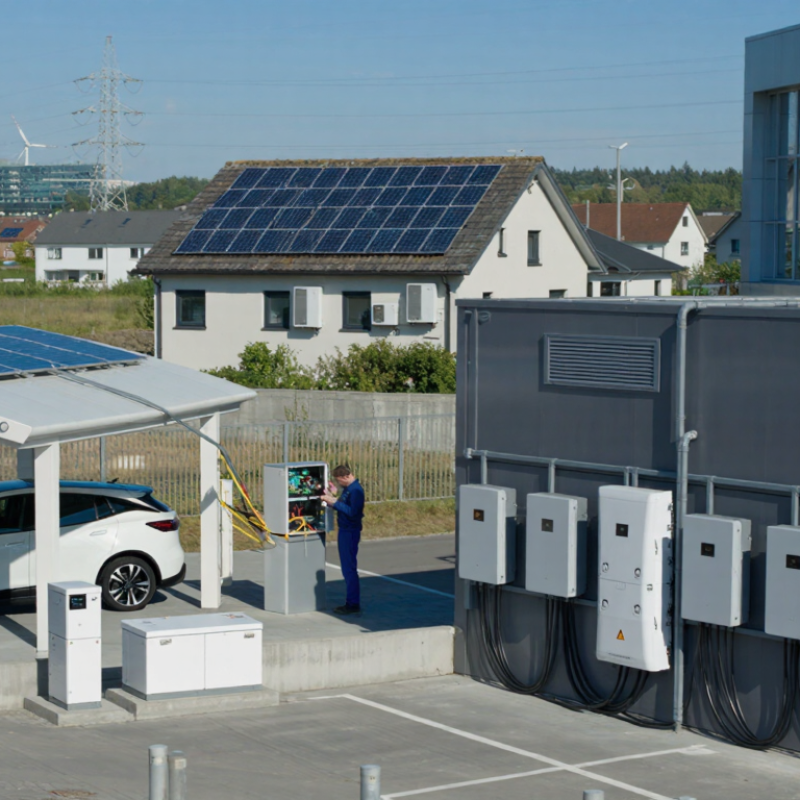
2026 Best Energy Storage Systems to Improve Efficiency?

Energy Storage Fundamentals: 85–95% Round-Trip Efficiency and 4-Hour Duration

2026 Best Energy Storage Systems to Improve Efficiency?

Energy storage systems are becoming practical tools for managing variable electricity demand. A well-designed system can deliver 85–95% round-trip efficiency under suitable operating conditions. This means 85–95 kilowatt-hours may return after 100 kilowatt-hours enter storage. The difference becomes heat, conversion loss, and auxiliary consumption.

Four-hour duration remains a useful planning benchmark. A 10-megawatt system can provide about 40 megawatt-hours at its rated output. Operators may charge it during low-demand periods and discharge it during evening peaks. In real facilities, temperature, battery age, charging speed, and standby loads affect results. Efficiency is not a fixed promise.

Meter placement also matters. Measuring only the battery may produce better figures than measuring the complete system. Engineers should check power electronics, cooling equipment, controls, and grid connections. A site walk can reveal details that a spreadsheet misses, such as dusty filters or restricted airflow. Small losses accumulate.

I would question any performance claim without a defined test boundary. Independent commissioning data offers stronger evidence than a sales estimate. Even then, four-hour operation may not fit every daily load pattern. A shorter, frequent cycle can sometimes outperform a larger system used irregularly. The best design balances efficiency, duration, safety controls, maintenance access, and changing demand. Some assumptions will be wrong. Regular measurement exposes them early.

Lithium-ion systems generally provide the highest round-trip efficiency for short-duration applications, while pumped hydro, flow batteries, compressed-air storage, and thermal storage can support longer discharge periods. Values shown are representative technology benchmarks; actual performance depends on system design, operating conditions, and project scale.

Lithium-Ion Options: LFP vs. NMC, Safety, Degradation, and $/kWh Trends

In 2026, lithium-ion storage remains a practical choice for homes, businesses, and renewable power projects. The strongest option depends on daily cycling, available space, temperature, and safety requirements. LFP cells use iron and phosphate chemistry. They generally offer stronger thermal stability, longer cycle life, and lower material concerns. NMC cells usually provide higher energy density. That advantage matters where installation space is limited.

Safety still requires more than chemistry selection. A properly engineered system needs battery management, thermal monitoring, ventilation, and certified protection equipment. LFP is less prone to thermal runaway, but it is not risk-free. Poor wiring, damaged cells, or incorrect charging can create serious hazards. NMC systems need especially careful temperature control. Installers should review operating records, not rely only on brochure claims.

Cost trends are becoming more complicated. Battery pack prices have fallen substantially over the past decade, yet complete installed systems still include inverters, labor, software, permits, and grid upgrades. In many markets, residential systems may range from roughly $300 to $700 per usable kWh installed. Large projects can cost less per kWh, but site conditions change the calculation. LFP often delivers better lifetime value because its degradation is usually slower under frequent cycling. NMC may still win when space or weight dominates. The choice is not perfectly clean. Real-world performance depends on cycling depth, heat, charging habits, and maintenance. A spreadsheet can miss those details.

Long-Duration Storage: Flow, Sodium-Ion, Thermal, and Hydrogen at 10+ Hours

2026 Best Energy Storage Systems to Improve Efficiency?

Long-duration storage is becoming more practical as solar and wind output shifts across entire days. Systems lasting ten hours or more can reduce curtailment and support evening demand. Yet, the best option depends on local weather, grid design, and the value of stored energy.

Flow batteries use separate tanks for power and energy capacity. They suit large sites needing frequent cycling, although pumps and membranes can reduce round-trip efficiency. Sodium-ion systems offer a lower-cost chemistry with less dependence on scarce materials. Their energy density remains lower, so a project may need more containers and land. Cold-weather performance also requires careful testing.

Thermal storage can hold heat in insulated media, molten salts, or industrial materials. It works well when a factory needs steam or process heat, but converting that heat back into electricity may lose substantial energy. Hydrogen supports multi-day or seasonal storage. However, electrolyzers, compression, storage, and reconversion create several efficiency losses.

Field evaluations should measure more than nameplate capacity. Track usable energy after temperature control, auxiliary loads, degradation, and reserve requirements. A ten-hour rating can change during a heatwave. My early project assumptions focused too heavily on round-trip efficiency. That view was incomplete. For some facilities, reliable direct heat may matter more than electrical output. Operators should also examine water use, fire planning, maintenance access, and permitting timelines before selecting a system.

2026 Best Energy Storage Systems to Improve Efficiency? — Long-Duration Storage: Flow, Sodium-Ion, Thermal, and Hydrogen at 10+ Hours
Technology Typical Duration Estimated Round-Trip Efficiency Response Time Cycle Life and Calendar Life Self-Discharge Scalability for 10+ Hours Key Strengths Main Limitations Best-Fit Applications
Vanadium Redox Flow Battery 10–24 hours; longer durations are possible by increasing electrolyte volume 60–85% Milliseconds to seconds Approximately 10,000–20,000 cycles; commonly 20+ years with appropriate maintenance Very low; stored energy remains available while the electrolyte is isolated from the cell stack High Independent sizing of power and energy, deep-discharge capability, strong safety profile, and low degradation Lower energy density, higher balance-of-system requirements, and possible electrolyte cost volatility Renewable-energy shifting, microgrids, transmission support, and frequent daily cycling
Zinc-Based Flow Battery 8–24+ hours, depending on system design 60–80% Seconds to minutes Generally thousands to more than 10,000 cycles, depending on chemistry and operating conditions Very low High Abundant material options, nonflammable aqueous electrolytes in many designs, and flexible duration scaling Potential electrode-shape changes, electrolyte management needs, and less field history than mature lithium-ion systems Long-duration renewable integration, commercial microgrids, and stationary backup
Sodium-Ion Battery Typically 2–8 hours; 10+ hours is technically possible with increased capacity and system sizing 80–92% Milliseconds to seconds Approximately 3,000–8,000 cycles for many current designs; life varies significantly by chemistry and operating conditions Low to moderate; generally higher than flow batteries but manageable in stationary systems Medium Uses widely available sodium, performs well at lower temperatures, and can reduce dependence on lithium, nickel, and cobalt Lower energy density than many lithium-ion cells, developing supply chains, and limited long-duration deployment history Short- to medium-duration renewable shifting, cold-climate storage, and cost-sensitive stationary systems
High-Temperature Thermal Energy Storage 10 hours to several days 40–70% when electricity is converted back to electricity; higher when used directly for heat Minutes to hours, depending on the heat-to-power equipment Often 20–40 years for tanks and insulation; component life depends on temperature and cycling Low when well insulated; heat loss increases with storage duration and temperature High Low-cost storage media, use of abundant materials, large-scale capacity, and valuable direct-heat output Lower electrical round-trip efficiency, thermal losses, and potential need for specialized heat exchangers or turbines Industrial heat, district heating, concentrated solar power, and renewable electricity-to-heat projects
Molten-Salt Thermal Storage 10–15 hours for many power applications; multi-day designs are possible 35–50% when electricity is regenerated; much higher when solar heat is used directly Minutes to tens of minutes Typically 20–30 years for major storage equipment, subject to corrosion and thermal cycling Low to moderate; insulation quality and storage temperature are important High Proven large-scale thermal storage approach, relatively low-cost storage medium, and strong suitability for solar-thermal plants Freezing risk, corrosion control, heat tracing requirements, and lower electrical efficiency than electrochemical storage Solar-thermal generation, industrial heat, and long evening peak coverage
Hydrogen Energy Storage 10 hours to seasonal storage; weeks or months are possible 25–45% for electricity-to-hydrogen-to-electricity pathways; higher if hydrogen is used directly Seconds to minutes for fuel cells; minutes to hours for turbine-based generation Electrolyzer and fuel-cell life is commonly measured in tens of thousands of operating hours; storage vessels can operate for decades with inspection Very low in properly sealed tanks or underground storage; hydrogen itself does not self-discharge like a battery Very High Excellent for seasonal storage, large energy capacity, fuel production, and decoupling storage duration from power capacity Low round-trip efficiency, high equipment cost, hydrogen leakage and embrittlement concerns, and strict safety requirements Seasonal renewable balancing, long-duration backup, heavy industry, synthetic fuels, and remote power systems
Compressed-Air Energy Storage 8–100+ hours, depending on cavern or vessel capacity 40–70% Minutes to tens of minutes Approximately 20–40 years for major infrastructure; cycling capability depends on equipment design Very low while compressed air remains contained High Large energy capacity, long service life, and relatively low self-discharge Often requires suitable geological formations, large construction projects, and thermal-management equipment Utility-scale grid balancing, renewable curtailment reduction, and multi-day backup
Pumped-Storage Hydropower 10 hours to several days 70–85% Seconds to minutes Typically 50–100+ years for civil infrastructure; electromechanical equipment requires refurbishment Very low; stored energy is retained as reservoir elevation Very High High power capability, long asset life, mature technology, and strong grid-balancing performance Requires suitable terrain, substantial permitting and construction time, and potential environmental or water-use impacts Regional grid storage, peak shifting, frequency regulation, and renewable integration

Note: Performance ranges are indicative industry-level values rather than guarantees. Actual results vary with system architecture, ambient conditions, operating temperature, auxiliary loads, conversion equipment, duty cycle, and project duration. Round-trip efficiency refers to electricity returned divided by electricity consumed; thermal and hydrogen systems can provide higher overall value when their heat or fuel output is used directly.

System Selection Metrics: LCOS, 80% Capacity Retention, and 15–20-Year Life

Choosing an energy storage system in 2026 requires more than comparing battery prices. LCOS, or levelized cost of storage, shows the expected cost of each usable kilowatt-hour over the system’s operating life.

A reliable calculation includes purchase cost, installation, maintenance, efficiency losses, financing, replacement parts, and recycling expenses. Cheap energy is not always cheap storage.

Capacity retention deserves equal attention. A system promising 80% retention means it should still deliver at least 80% of its original usable capacity under defined conditions. Those conditions matter.

Review cycle count, daily depth of discharge, operating temperature, and warranty testing methods. A battery rated for 10,000 cycles may perform differently in a hot room with frequent full discharges. Numbers can mislead.

A practical selection should target a 15–20-year service life, but calendar aging can reduce performance before cycle limits are reached. Ask for degradation data from comparable installations, not only laboratory results.

Check whether the energy management system can limit charging during extreme temperatures. This detail may protect capacity and reduce maintenance work.

I would also model a weaker case, such as faster degradation or lower electricity savings. It feels conservative, yet real projects rarely follow perfect spreadsheets. A system with slightly higher LCOS may offer better reliability when replacement timing, downtime, and usable capacity are included.

Grid Integration: IEEE 1547, UL 9540A, and 2030 Storage Growth Targets

Energy storage systems are becoming central to grid efficiency by 2030. Their value depends on more than battery capacity. Operators must match storage duration, response speed, and local grid conditions.

IEEE 1547 provides a practical framework for connecting distributed energy resources to the grid. It addresses voltage regulation, frequency response, ride-through behavior, and communication requirements. During commissioning, engineers should verify settings with real event simulations, not only software screens. A battery system may respond quickly, yet still create problems if protection settings conflict with feeder limits. That gap matters.

UL 9540A evaluates thermal runaway and fire propagation behavior through controlled testing. It supports safer spacing, ventilation, detection, and emergency planning. However, it is a test method, not a guarantee that every installation is risk-free. A responsible design reviews rack layout, enclosure temperatures, gas detection, and access for emergency crews. Field data also deserves attention. Sensors can drift, weather can change, and maintenance records may be incomplete. Safety is not static.

2030 storage targets will likely increase demand for flexible systems supporting solar, wind, and peak-load management. Four-hour systems may serve evening peaks, while shorter systems can stabilize frequency. The best choice depends on measured load profiles and interconnection studies. Cost projections can also disappoint when upgrades, permits, and replacement planning are ignored. Reliable deployment requires transparent testing, qualified engineers, and performance data collected after commissioning.

FAQS

What is the main difference between LFP and NMC batteries?

LFP uses iron and phosphate chemistry. It usually offers better thermal stability and longer cycle life. NMC provides higher energy density. That helps in tight spaces.

Is LFP completely safe?

No battery chemistry is risk-free. Damaged cells, poor wiring, or incorrect charging can create hazards. LFP reduces some risks, but still needs monitoring, ventilation, and protection equipment.

When might NMC be the better choice?

NMC may suit installations with limited floor space or strict weight limits. Its higher energy density can fit more capacity into a smaller enclosure. Space changes everything.

What costs should be included in a storage budget?

Include batteries, inverters, labor, software, permits, grid upgrades, maintenance, and future parts. Residential systems may cost about $300–$700 per usable kWh installed. Actual prices vary by site.

What does LCOS measure?

LCOS estimates the cost of each usable kilowatt-hour over the system’s life. It includes efficiency losses, financing, maintenance, replacements, and recycling. A cheap battery may still produce expensive energy.

What does 80% capacity retention mean?

It means the system should retain at least 80% of its original usable capacity under stated conditions. Check cycle count, discharge depth, temperature, and testing methods. The fine print matters.

Can a battery really last 15–20 years?

It may, but calendar aging can reduce capacity before cycle limits are reached. Hot rooms and frequent full discharges may accelerate degradation. I would model a weaker outcome too.

How should storage systems connect safely to the grid?

Engineers should verify voltage control, frequency response, ride-through behavior, and communication settings. Real event simulations are valuable. Software screens alone may miss problems.

What should thermal safety testing and emergency planning examine?

Review thermal runaway behavior, fire propagation, enclosure temperatures, gas detection, spacing, and emergency access. Sensors can drift. Maintenance records may also be incomplete.

How should a project choose storage duration?

Match duration to measured load profiles and grid needs. Four-hour systems may support evening peaks. Shorter systems can respond quickly to frequency changes. The spreadsheet may still miss site surprises.

Conclusion

Energy storage systems can significantly improve power efficiency by capturing surplus electricity and releasing it when demand or prices rise. Most conventional systems deliver 85–95% round-trip efficiency and are commonly designed for about four hours of discharge. Lithium-ion technology remains widely applicable, with LFP generally emphasizing safety and durability, while NMC can offer higher energy density. Comparing degradation, thermal management, usable capacity, and declining dollar-per-kilowatt-hour costs is essential when deciding how to improve energy efficiency using storage systems.

For applications requiring ten or more hours of operation, flow batteries, sodium-ion systems, thermal storage, and hydrogen provide additional pathways beyond standard lithium-ion designs. Buyers should evaluate levelized cost of storage, expected operation, 80% capacity retention, and a 15–20-year service life rather than relying only on upfront price. Effective grid integration also requires attention to IEEE 1547 interconnection expectations, UL 9540A fire-safety testing, control compatibility, and projected storage growth through 2030. A well-matched system can reduce losses, strengthen resilience, and support more flexible renewable-energy use.

Isabella

Isabella

Isabella is a dedicated marketing professional with a sharp focus on driving brand growth and engagement through strategic content creation. With an extensive background in digital marketing, she combines her passion for storytelling with her keen understanding of industry trends to deliver......